

By Sabri Cadaawe
Published on [Date]
Introduction
In the heart of the Horn of Africa, Djibouti—a nation often overshadowed by its larger neighbors—is quietly nurturing a technological renaissance. On March 5, 2024, the country embarked on a transformative journey with the launch of the Machine Learning Bootcamp under the Frontier Tech Leaders (FTL) program. This initiative, spearheaded by the United Nations Development Programme (UNDP), aims to equip young Djiboutians with essential digital skills, fostering innovation and bridging the digital divide that has long impeded progress in Least Developed Countries (LDCs).
Imagine a bustling room filled with eager faces, each reflecting a blend of anticipation and determination. Among them is Amina, a 24-year-old computer science graduate who, despite her academic accolades, struggled to find opportunities to apply her knowledge in a meaningful way. “Before this bootcamp, I felt like I had the tools but no workshop,” she shares. “Now, I see a path to not only build my future but also contribute to my community.”
This article delves into the inception, execution, and impact of the Machine Learning Bootcamp in Djibouti, exploring its role in shaping the nation’s technological landscape and its potential to serve as a model for similar initiatives across the globe.
Section 1: The Genesis of the Frontier Tech Leaders Program
The Frontier Tech Leaders program was conceived during the fifth United Nations Conference on the Least Developed Countries (LDC5) in March 2023. Recognizing the critical need to empower youth in LDCs through digital transformation, the UNDP’s Istanbul International Center for Private Sector in Development (IICPSD) and the United Nations Technology Bank for LDCs (UNTB) joined forces to launch this initiative. Their mission: to cultivate a new generation of tech specialists capable of addressing local challenges through innovative digital solutions.
Djibouti, with its strategic location and burgeoning youth population, was identified as an ideal candidate for the program’s pilot implementation. The nation’s government, particularly the Ministry of Economy and Finance and the Ministry of Digital Economy and Innovation, embraced the initiative, viewing it as a pivotal step toward sustainable development and economic diversification.
Section 2: The Bootcamp Experience
From March to July 2024, the Machine Learning Bootcamp unfolded over three intensive months. Out of more than 500 applicants, 43 participants were meticulously selected, representing a diverse cross-section of society—including university students, public sector employees, and private sector professionals. This diversity enriched the learning environment, fostering a collaborative spirit among individuals with varying perspectives and experiences.
The curriculum was robust, encompassing foundational programming skills with a focus on Python, advancing to complex machine learning algorithms, and culminating in practical projects aimed at solving real-world societal issues. Participants engaged in hands-on sessions, workshops, and mentorship programs, all designed to bridge the gap between theoretical knowledge and practical application.
One notable project emerged from a team led by Hassan, a 27-year-old data analyst. His team developed a predictive model for road accidents, utilizing historical data to identify high-risk zones and propose preventive measures. “We wanted to create something that could save lives,” Hassan explains. “The bootcamp gave us the tools and the confidence to turn our ideas into actionable solutions.”
Section 3: Graduation and Recognition
The culmination of the bootcamp was marked by a graduation ceremony on July 15, 2024, held at the Center for Leadership and Entrepreneurship (CLE). The event was graced by dignitaries, including H.E. Ilyas Moussa Dawaleh, Minister of Economy and Finance, and representatives from the UNDP and other international organizations.
Graduates presented their capstone projects, showcasing innovative solutions ranging from agricultural yield predictions to environmental sustainability assessments. The top three projects were recognized for their ingenuity and potential impact:
- First Prize: A predictive model for road accidents, focusing on public health and safety.
- Second Prize: An agricultural forecasting tool aimed at enhancing food security and addressing climate change challenges.
- Third Prize: An environmental assessment application designed to monitor and promote vegetation health across Djibouti.
In his address, Minister Dawaleh emphasized the critical role of digital skills in the nation’s development trajectory. “Investing in our youth’s technological capabilities is not just an option; it’s a necessity for our sustainable future,” he stated. He also announced the launch of a second cohort, underscoring the government’s commitment to nurturing local talent in the tech sector.
Section 4: Looking Ahead
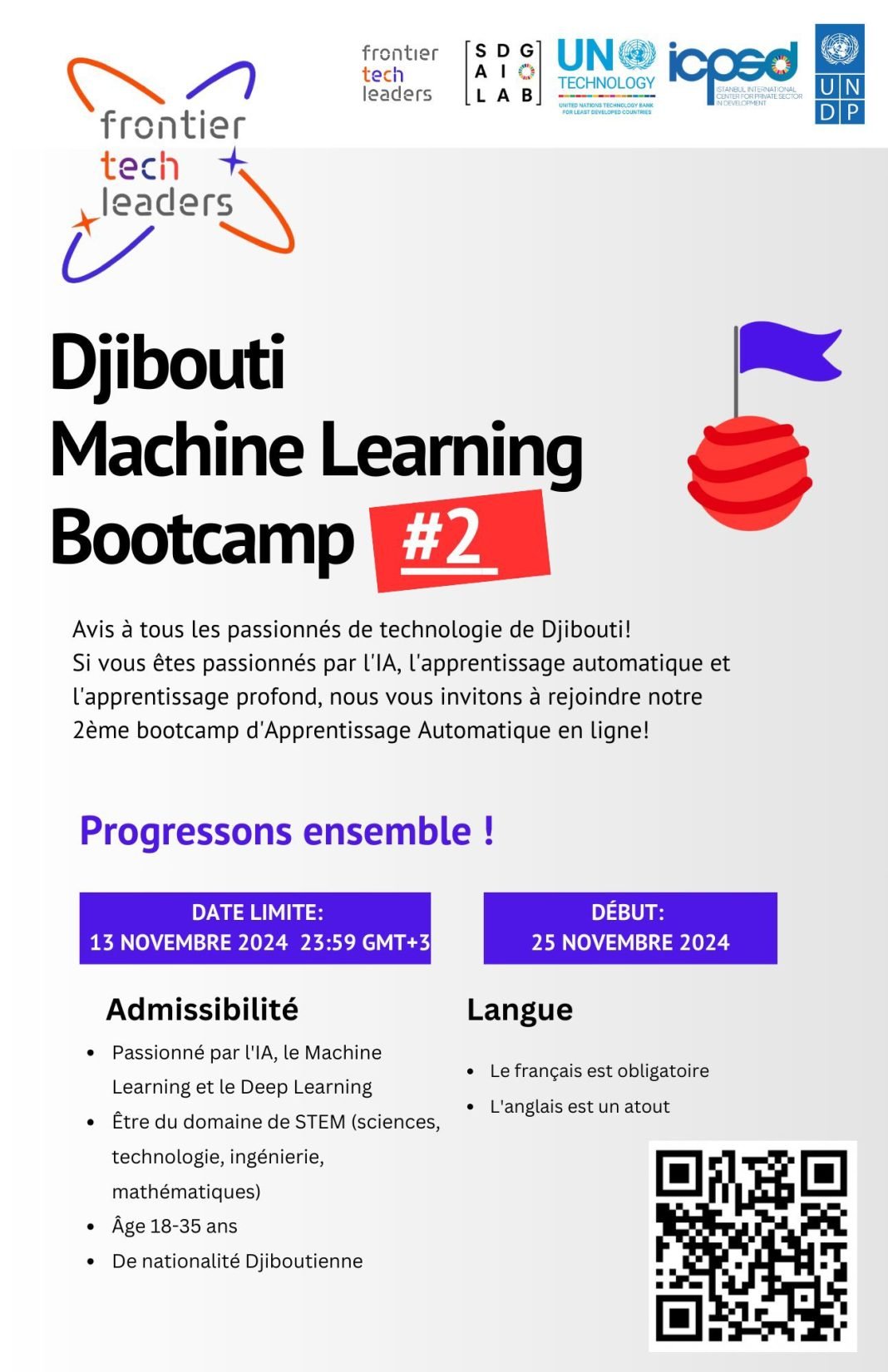
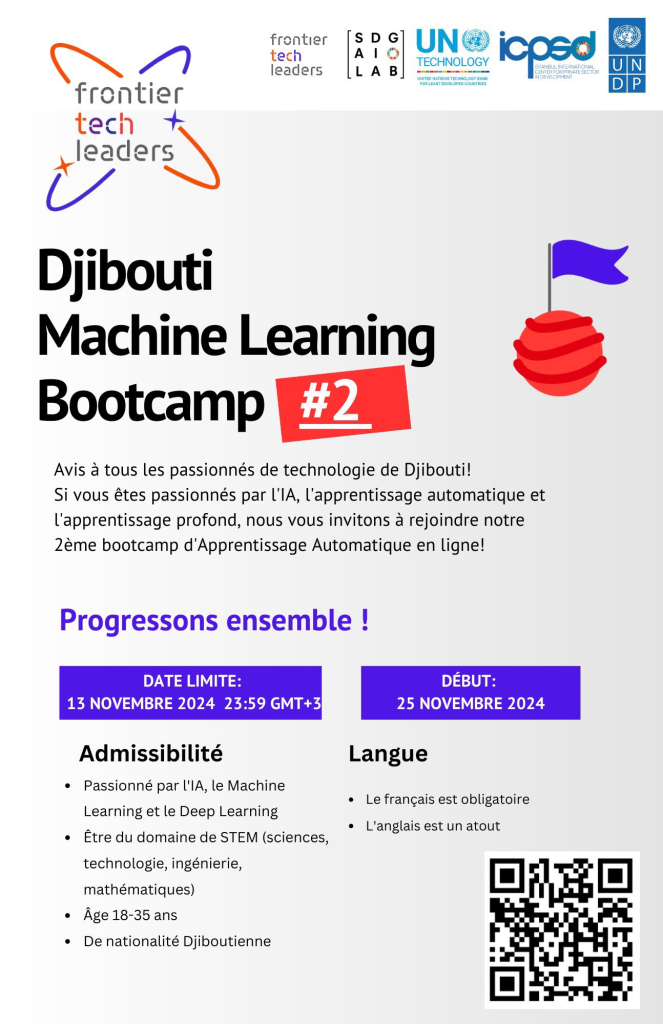
Building on the success of the inaugural bootcamp, the application period for the second edition was extended until November 13, 2024, aiming to attract a broader pool of young Djiboutians aged 18 to 30. The forthcoming cohort is expected to delve deeper into advanced machine learning techniques, with an increased emphasis on entrepreneurship and leadership skills.
The sustained support from both the government and international partners, notably the UNDP, is pivotal in ensuring the program’s longevity and scalability. There is a concerted effort to integrate the bootcamp’s outcomes into the broader national development agenda, aligning with the Sustainable Development Goals (SDGs) and Djibouti’s Vision 2035.
Important Elements about the Machine Learning Bootcamp in Djibouti – 2024 Edition
Context and Objectives
The Machine Learning Bootcamp in Djibouti, launched on March 5, 2024, is part of the Frontier Tech Leaders (FTL) program, designed to equip young Djiboutians with essential digital skills and foster innovation in the country’s tech sector. The initiative aims to bridge the digital divide in least developed countries and prepare participants for the challenges of the 21st century.
Event Details
- Launch Date: March 5, 2024
- Duration: 3 months
- Cohort: The first cohort selected 43 participants from over 500 applications, representing various sectors (universities, public and private sectors).
- Training: Participants received intensive training in machine learning, focusing on practical projects aimed at solving societal problems.
Graduation Ceremony
The graduation ceremony took place on July 15, 2024, marking a key moment for graduates. Among the guests were ministers, UN representatives, and other dignitaries. Graduates presented their final projects, with some being awarded for their innovation.
Notable Projects
The projects presented by graduates included:
- Road Accident Prediction (1st prize): Focused on public health.
- Agricultural Crop Prediction (2nd prize): Related to climate action and food security.
- Vegetation Assessment in the Republic of Djibouti (3rd prize): Concerned with environmental sustainability.
Future Perspectives
The Minister of Economy and Finance, H.E. Ilyas Moussa Dawaleh, emphasized the importance of developing diverse digital skills to ensure the sustainable development of the country. He also announced the launch of a second cohort to continue promoting local talent in the tech field.
Call for Applications
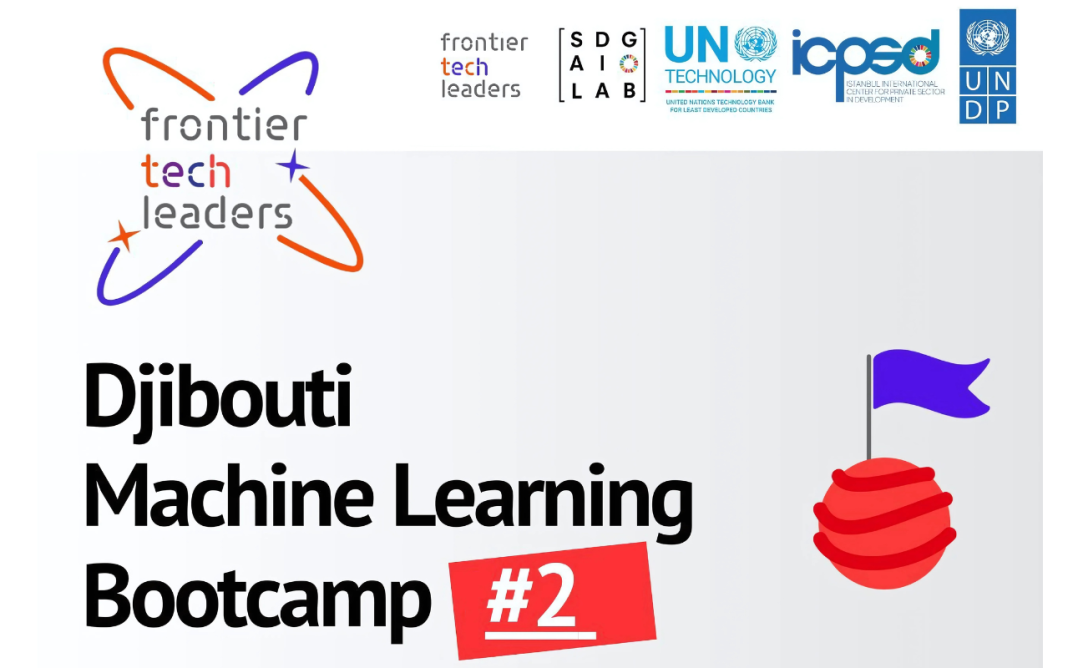
The application period for the second edition of the Bootcamp has been extended until November 13, 2024, aiming to attract more young Djiboutians aged 18 to 35.
Conclusion
The Machine Learning Bootcamp in Djibouti stands as a testament to the transformative power of targeted educational initiatives. By equipping the nation’s youth with cutting-edge digital skills, the program is not only bridging the digital divide but also fostering a culture of innovation and problem-solving.
As Amina reflects on her journey, she expresses a sentiment shared by many of her peers: “This experience has been more than just learning about technology; it’s about realizing our potential to drive change in our communities.”
As Djibouti continues to invest in its human capital, initiatives like the Frontier Tech Leaders’ Machine Learning Bootcamp will undoubtedly play a crucial role in shaping a resilient and prosperous future for the nation.