

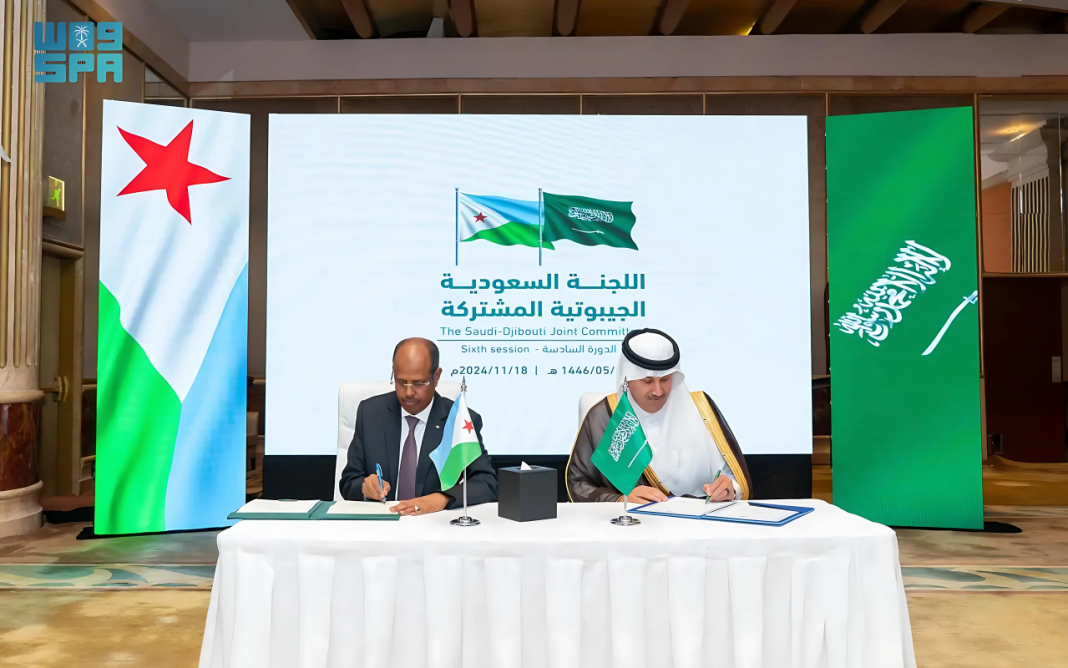

Saudi Arabia and Djibouti reaffirmed their commitment to deepening economic cooperation during the sixth session of their joint committee held in Riyadh. The meeting was co-chaired by Saudi Minister of Transport and Logistics, Saleh Al-Jasser, and Djibouti’s Minister of Foreign Affairs and International Cooperation, Mahamoud Ali Youssouf. The two leaders reviewed progress in bilateral relations and explored new opportunities for collaboration.
Strengthening Bilateral Relations
In his opening remarks, Saleh Al-Jasser highlighted the strong ties between the two nations, emphasizing the importance of their partnership in an evolving global economic landscape. He noted that trade between Saudi Arabia and Djibouti had reached a record-breaking 7 billion Saudi Riyals (approximately $1.8 billion) in 2023, reflecting the growing vitality of their economic relationship.
Vision 2030 and Public-Private Partnerships
Al-Jasser underscored the pivotal role of Saudi Arabia’s Vision 2030 in enhancing the Kingdom’s economic appeal and diversifying its revenue sources. He stressed the need to promote public-private partnerships (PPPs) as a key driver of investment and business opportunities. These partnerships, he explained, are vital to achieving Saudi Arabia’s ambitious target of increasing the private sector’s contribution to GDP to 65% by 2030.
Djibouti’s Commitment
On his part, Mahamoud Ali Youssouf praised the efforts of both countries to strengthen economic ties. He expressed satisfaction with the outcomes of the session and highlighted the critical role economic cooperation plays in Djibouti’s sustainable development goals. He reiterated Djibouti’s commitment to further expanding this fruitful partnership.
Future Prospects
The meeting concluded with the signing of the final minutes, outlining agreements to enhance collaboration in various sectors, including trade, investment, and logistics. This milestone reflects a shared determination to explore innovative pathways for mutually beneficial growth while aligning with broader regional economic initiatives.
This session not only underscores the strengthening of bilateral relations between Saudi Arabia and Djibouti but also reaffirms their joint commitment to sustainable and inclusive economic growth.
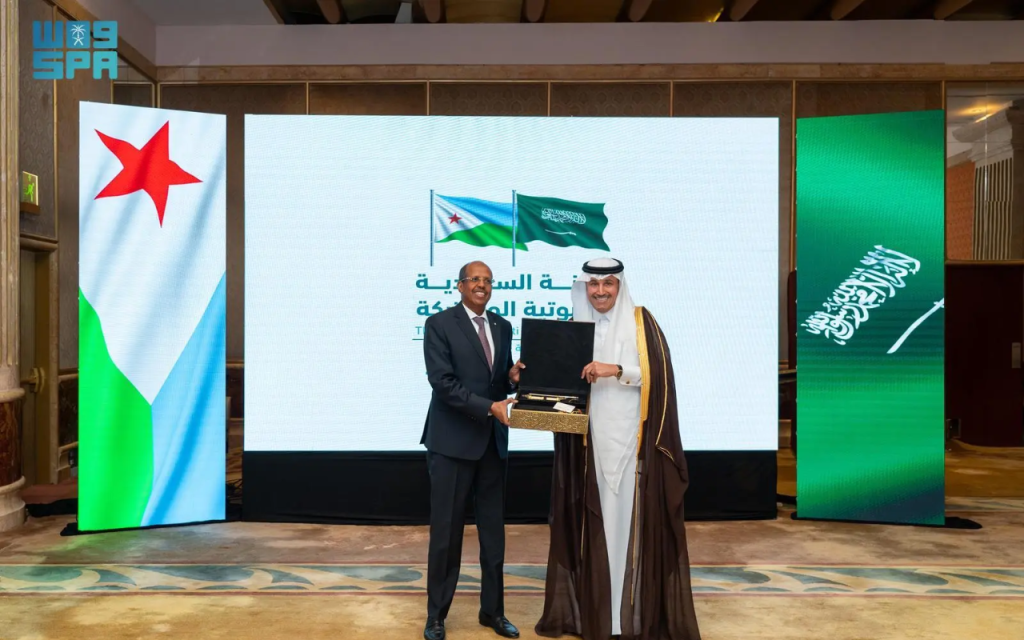
The Saudi Minister of Transport and Logistics Services, Saleh Al-Jasser, and his Djiboutian counterpart, Mahamoud Ali Youssouf, Minister of Foreign Affairs and International Cooperation
Key Areas of Cooperation
Saudi Arabia and Djibouti share several areas of mutual interest that are central to their economic partnership:
Transport and Logistics: Djibouti’s strategic port serves as a vital gateway for East African trade, while Saudi Arabia aims to boost its logistics capabilities as part of Vision 2030. Public-private partnerships (PPPs) are central to these efforts, enabling more efficient supply chains.
Energy: Saudi Arabia’s ambitious plan to produce over 58.7 GW of renewable energy by 2030 aligns with Djibouti’s aspirations to diversify its energy sources. This opens doors for collaboration in renewable energy technologies and infrastructure.
Agriculture: Both nations aim to enhance food security and sustainable agricultural practices. By leveraging PPPs, they can combine private sector expertise with public sector goals to improve agricultural systems.
Tourism: Saudi Arabia’s push to diversify its economy through tourism aligns with Djibouti’s efforts to promote its unique attractions. Collaborative investments could bolster the tourism sector in both countries.
Industry and Technology: With a focus on innovation and industrial development, Saudi Arabia’s initiatives to attract foreign investment could support Djibouti in acquiring technology and creating job opportunities.
How Saudi Arabia’s Renewable Energy Transition Could Benefit Djibouti
Saudi Arabia’s move towards renewable energy has the potential to significantly impact Djibouti in several ways:
- Energy Partnerships
As Saudi Arabia invests in renewable energy projects, it could collaborate with Djibouti, which aims to become the first African country to produce 100% green energy by 2035. - Technology Transfer
Saudi advancements in renewable energy technology, particularly in solar and wind energy, could be shared with Djibouti to enhance its local capacity. - Increased Investments
As Saudi Arabia diversifies its economy, it may channel investments into African energy and infrastructure projects, including in Djibouti, strengthening the latter’s regional position. - Regional Energy Integration
Closer ties with Saudi Arabia could help Djibouti become a key player in regional energy supply chains, attracting further foreign investment. - Economic and Social Growth
Enhanced energy infrastructure and investments could stimulate Djibouti’s economy, create jobs, and improve living standards, aligning with its development goals.
In conclusion, the strengthened partnership between Saudi Arabia and Djibouti reflects their shared vision for a prosperous and sustainable future. Through strategic collaborations in key sectors such as trade, energy, logistics, and innovation, both nations are laying the groundwork for mutually beneficial growth that transcends borders.
Saudi Arabia, with its ambitious Vision 2030, is taking the lead in redefining its economy and inspiring innovative partnerships. Meanwhile, Djibouti, as a strategic hub in East Africa, demonstrates a strong commitment to maximizing development opportunities through collaborative initiatives.
This partnership goes beyond economic gains, embodying a shared commitment to shared prosperity, sustainable development, and greater regional integration. Together, these two nations prove that well-planned, forward-looking cooperation can transform their respective economies while serving as a model for successful international partnerships. Their alliance promises to become a powerful driver for addressing global and regional challenges while seizing the opportunities of an ever-evolving world.
Source: https://spa.gov.sa/fr/N2209757